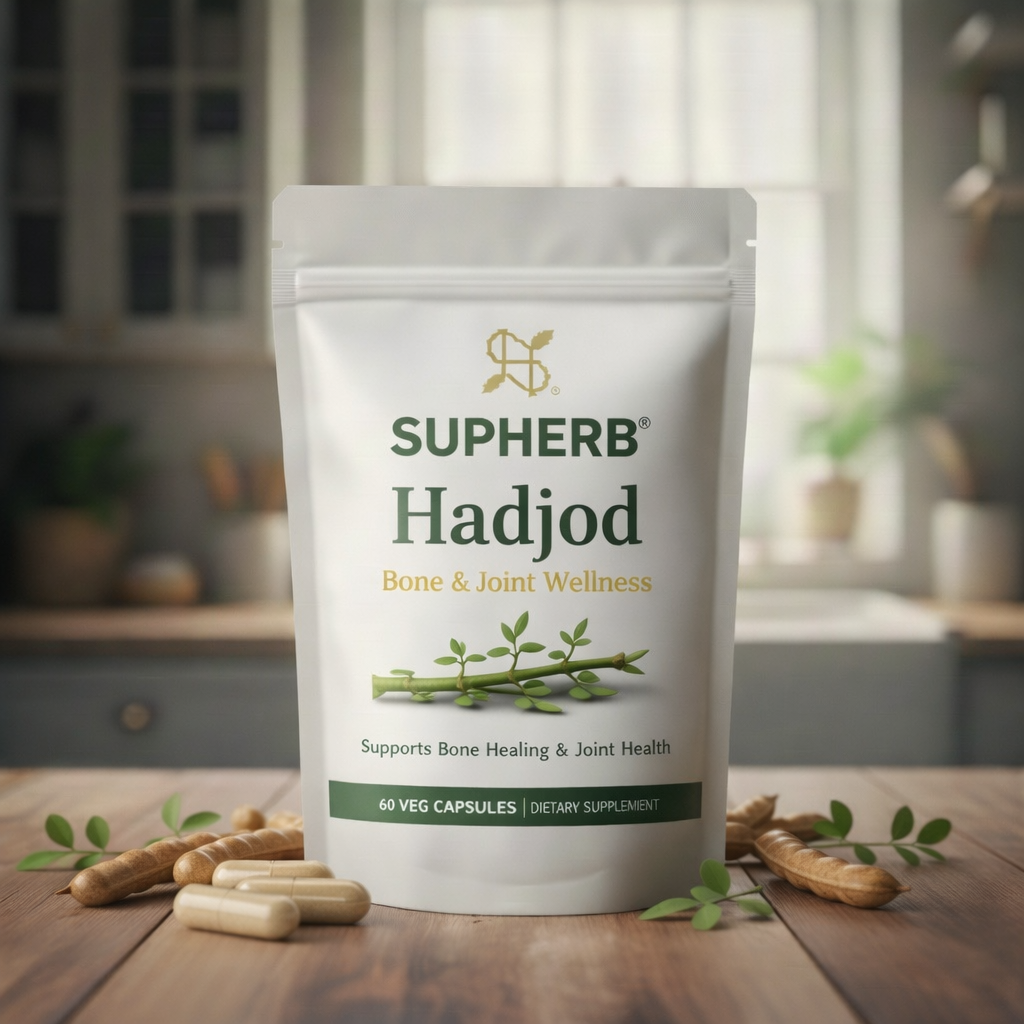
Hadjod is a perennial succulent plant from the grape family, identifiable by its square-shaped, fleshy stems. This unique “Devil’s Backbone” plant has been used for centuries in traditional Indian and African medicine as a first-line remedy for bone and joint injuries. Modern research has focused on its ability to increase bone mineral density and support the proliferation of bone-forming cells.
Common Names
● French: Cissus quadrangularis
● German: Veldtraube
● Chinese: Sì léng pútáo (四棱葡萄)
● Arabic: وس واد را و ر س (Cissus quadrangularis)
● Spanish: Ciso, Uva de veldt
● Russian: Циссус четырехугольный (Tsissus chetyrekhugol’nyy)
● Japanese: シッサス (Shissasu)
General Usage
The Sanskrit name for Hadjod is Asthisamharaka, which powerfully translates to “that which protects the bones from destruction.” It is Ayurveda’s primary herb for bone health. It is traditionally used to accelerate the healing of fractures, strengthen bones, and improve joint health. It pacifies the Vata and Kapha doshas and is rich in calcium and phosphorous.
Rituals of Use
● For Bone & Joint Health: Mix half to one teaspoon of Hadjod powder with lukewarm water and consume once or twice daily, preferably after meals.
● As a Healing Poultice: A paste of the powder can be applied externally over sprains and swollen joints to help reduce pain and inflammation.
The SUPHERB® Promise
Sourcing
We source our Hadjod from trusted cultivators, ensuring the succulent stems are mature and rich in active compounds.
Purity & Processing
The stems are carefully dried and ground into a powder, making this remarkable bone-healer accessible for your daily wellness regimen.